The electrolyte plays the role of transferring ions and separating fuel gas and oxidizing gas. The anode and cathode are defined by the flow of current.
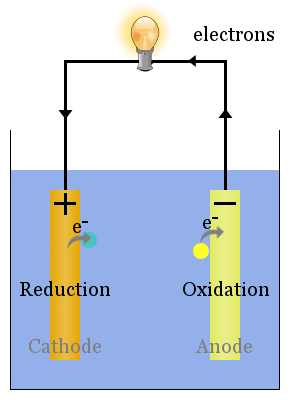 Definition Of Cathode Anode In Galvanic And Electrolytic Cells Chemistry Dictionary
The cathode is a metal oxide and the anode is made up of carbon or graphite.
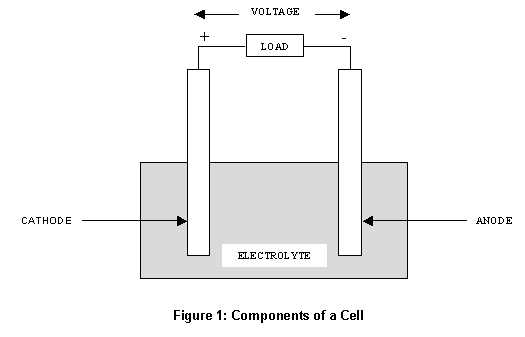
What is anode and cathode. This contrasts with a cathode an electrode through which conventional current leaves an electrical deviceA common mnemonic is ACID for anode current into device. The anode is usually the positive side. Decreasing the angle of the target also decreases the field size of the x-ray beam thereby altering the focal spot.
The cathode is where species are reduced. A cathode is an electrode where the electricity flows out of or given out. A cathode is a negative side.
Anode is the electrode at which current leaves the cell and where oxidation takes place while cathode is the electrode at which current enters the cell and reduction takes place. It acts as an electron acceptor. As a trustworthy rule keep in mind that anode and cathode refer to function not structure.
Anodecathode is not the same as positivenegative or vice versa. For example when recharging a rechargeable battery. The terms cathode and anode are used to refer to terminals of a polarised electrical device.
The anode is where species are oxidized. An anode is an electrode where the electricity moves into. The main difference between anode and cathode is that in general anode is the terminal where the conventional current flows into a device from outside whereas cathode is the terminal where conventional current flows out of the device.
In chemistry a cathode is the electrode of an electrochemical cell at which reduction occurs. Welcome to Target electrician youtube channel Dosto is video me ham Anode and Cathode ko bade hi simple tarike ke samjhenge is video ko dekhane ke bad apko. The cathode and anode locations are not fixed within a cell and can change depending on what is happening at any given time.
Focal Spot The small area of the target with which the electrons collide is called. The anode and cathode are usually porous structure to facilitate the introduction of reaction gas and the discharge of products. The cathode acts as an electron acceptor.
Cathode and anode play a major part in the chemical reactions that produce an electrical output. A useful mnemonic to remember this is AnOx RedCat Oxidation at the Anode Reduction at the Cathode. An anode is a positive sided electrode.
How do Anode and Cathode Work In Lithium-ion Batteries Just like any other electrolytic reaction the reaction inside the Lithium-ion battery is the same. It acts as an electron donor. A cathode is a negative sided electrode.
What is the Difference Between Anode and Cathode. The cathode is the electrode where electricity is given out or flows out of. In the general sense current refers to any movement of electrical charge.
However you should keep in mind the convention that current direction is according to where a positive charge would move not a negative charge. Alas this is not always true and incomplete. Anode is the sources of positive charge in the electric device that attracts the negative charge or anion or works as an electron acceptor whereas cathode attracts the positively charged cations whereas the negatively charged anions stays away from it.
The most popular explanation is as follows. The anode is the electrode where electricity moves into. An anode is an electrode through which the conventional current enters into a polarized electrical device.
To be able to determine the anode and cathode it is necessary to have a theoretical base and know that yes how. Is stronger toward the cathode side than the anode side. The anode is a positive electrode and the cathode is negative.
The cathode is the part of a diode that allows power to flow out and an anode is the part that allows it to flow in. The direction of conventional current the flow of positive charges in a circuit is opposite to the direction of electron. The physical construction of a diode varies slightly based on the reason for its use but certain factors remain the same.
The anode acts as an electron donor. It is the combination of these two elements that allows the diode to function. 2-8A small anode angle accentuates the heel effect.
For a battery being discharged the positive terminal is the cathode while for the same battery being recharged the positive terminal is the anode. The difference between anode and cathode is that electrons will move away from the anode whereas they move into the cathode of the cell. Hence reduction at the cathode.
Lets look at this in the article. Michael Faraday defined the cathode of a cell as the electrode to which cations positively charged ions like silver ions Ag flow within the cell to be reduced by reacting with electrons negatively charged from that electrode. This variation of intensity of the primary x-ray beam is called the heel effect Fig.
Anode and cathode definitions depend on charge and discharge. In an electrolytic cell oxidation reaction takes place at the anode. The key difference between anode and cathode is that anode is the positive terminal while cathode is the negative terminal.
Another mnemonic is to note the cathode has a c as does reduction. Under all circumstances anode and cathode are defined as follows.