However some of the organelles present in plant cells are different from other eukaryotic cells. Plant cells are eukaryotic cells present in green plants photosynthetic eukaryotes of the kingdom PlantaeTheir distinctive features include primary cell walls containing cellulose hemicelluloses and pectin the presence of plastids with the capability to perform photosynthesis and store starch a large vacuole that regulates turgor pressure the absence of flagella or centrioles except in.
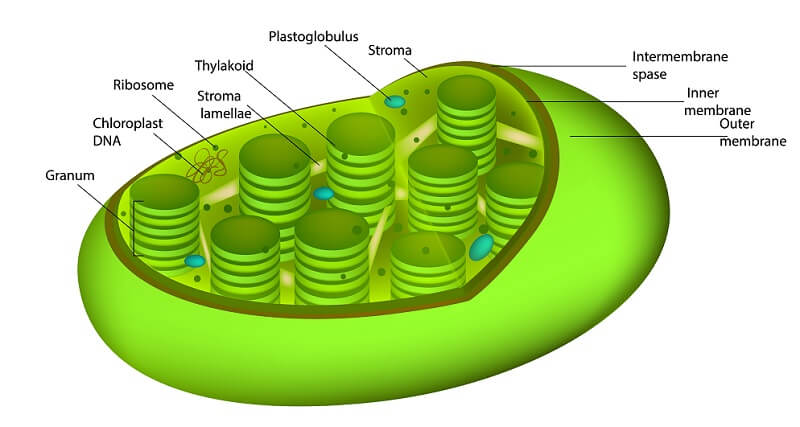 Plant Cell The Definitive Guide Biology Dictionary
It is widely used to produce clones of a plant in a method known as micropropagationDifferent techniques in plant tissue culture may offer certain advantages over traditional methods of propagation including.
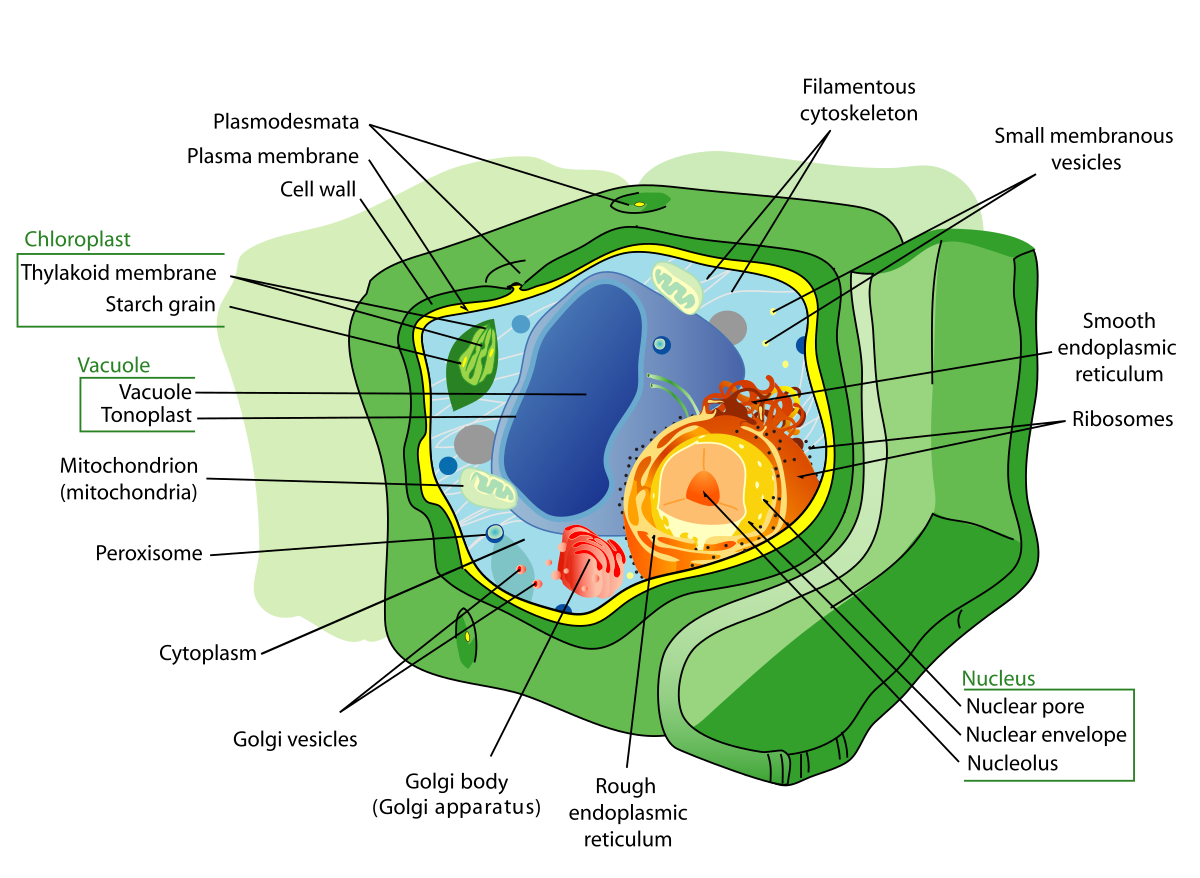
Examples of plant cells. Every organ in our body performs a variety of different functions such as digestion assimilation and absorptionSimilarly in the plants too there are different organs of the plant which performs specialized or specific functions. The plant cell organelles play an essential role in carrying out the regular activities of the cell. Some examples of specialized plant cell types and tissues include.
Plant cells are relatively large and can differ considerably within a plant. Nerve cells bone cells and liver cells for example all develop in ways that enable them to better perform their specific duties. The shape of these cells has many variations.
View examples of plant and animal cells. There are three types of plant cells sclerenchyma cells collenchyma cells and parenchyma cells. Plant tissues can be grouped into plant tissue systems each performing specialized functions.
There are various types of plant cells which include. Parenchyma cells collenchyma cells sclerenchyma cells xylem and phloem. Plant cells also have the usual eukaryotic organelles including a nucleus endoplasmic reticulum and Golgi apparatus.
Plant cells have a unique set of organelles that distinguishes them from the cells of animals and fungi. For example photosynthesis which is a characteristic of the plants is performed in the chloroplast. For example they are enclosed by a plasma membrane and have a nucleus and other membrane-bound organelles.
Plant tissue culture is a collection of techniques used to maintain or grow plant cells tissues or organs under sterile conditions on a nutrient culture medium of known composition. Plant cells resemble other eukaryotic cells in many ways. Plant and animal cells are both eukaryotic cells so they have several features in common such as the presence of a cell membrane and cell organelles.
As an organism grows its cells become specialized to perform specific functions. Animal cells are mostly round and irregular in shape while plant cells have fixed rectangular shapes. Plant cells are a type of eukaryotic cell that are found in organisms of the Plant Kingdom.
Cell Structure and Functions. Though most of them are isodiametric some of them are also either oval round or even polygonal depending on their location and the function. The presence of organelles called chloroplasts vacuoles and a cell wall are three key features of the cells of plants.
All big words but it is not hard to remember the difference. A collection of cells performing a specific function is called tissue. If you continue browsing the site you agree to the use of cookies on this website.
Some plant cells synthesize and store organic products while others help to transport nutrients throughout the plant. Both of these cell types have similar processes for reproduction which include mitosis and meiosisAnimal and plant cells obtain the energy they need to grow and maintain normal cellular. In addition to having chloroplasts plant cells also typically have a cell wall made of a rigid sugars to enable plant tissues to maintain their upright structures such as leaves stems and tree trunks.
The most important structures of plant and animal cells are shown in the diagrams below which provide a clear illustration of how much these cells have in common. In plants the cell wall contains mainly cellulose along with other molecules like hemicellulose pectin and lignins. Parenchyma cells sclerenchyma cells collenchyma cells xylem cells and phloem cells.
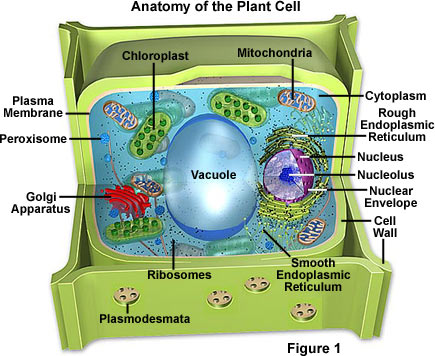
A typical plant cell is represented by the diagram in Figure 2. While synthesis of ATP adenosine triphosphate a form of energy takes place in the mitochondria. These substances are not found in.
For example animal cells do not have a cell wall or chloroplasts but plant cells do. For example fungi cell walls contain chitin and bacterial cell walls contain peptidoglycan. For instance the roots of the plants help in the absorption of minerals and water.
Plant cells have all the same structures as animal cells plus some additional structures. The parenchyma cells form the major components of organs and are the most prevalent cells in plants. The composition of the plant cell wall differentiates it from the cell walls of other organisms.
Animal cells and plant cells are similar in that they are both eukaryotic cellsThese cells have a true nucleus which houses DNA and is separated from other cellular structures by a nuclear membrane. Dermal tissue this tissue lies on the surface of plants and its made up of epidermal cells that protect the plants from losing water. For example plant cells are formed at the meristem which multiple and grows to for plant tissues.
Slideshare uses cookies to improve functionality and performance and to provide you with relevant advertising. Lets find out more. The shape of these cells has many variations.
The three categories of plant cells. A plant tissue system is defined as a functional unit connecting all organs of a plant. A plant cell is a eukaryotic cell that contains a true nucleus and certain organelles to perform specific functions.
Most plants come from seeds. They follow a cyclic process of starting a new life growing and then coming back to the starting stage reproducing.
 Life Cycle Of The Plant Life Cycles Plant Life Cycle Science Booklets
The life cycle is complete and can begin again.

Life cycle of a plant. Once an ovule has been fertilised by the pollen it develops into a seed containing an embryo a young root and shoot and a food store that will allow the young plant to start to grow at a later stage of the life cycle. Many plants make flowers which turn into. All flowering plants go through the following life cycle.
These plant does not produce seeds. Say aloe to the life cycle of a plant with this excellent PowerPoint for primary school childrenThis teacher-made PowerPoint breaks down the life cycle of flowering plants into 5 easy-to-follow stepsComplete with facts diagrams and colourful illustrations its the perfect way to introduce the topic to your childrenYou can try showing the PowerPoint in your science lessons then. These free printable worksheets coloring pages cut paste activities are perfect for hands-on science learning centers.
Some of the worksheets for this concept are Life cycle of a flowering plant Plant lifecycle 6 8 grade Garden lesson investigating the life cycle of a plant Name cut out the stages of the plant life cycle and paste Life cycle of a plant name color and cut out the pictures Life cycles work for grades 3 5 pdf Plant. The ovary wall then develops into a fruit or a pod to protect the seed. The stem leaves and flower emerge above.
In other plant groups like pteridophytes and gymnosperms the basic stages may differ slightly. It includes germination of seeds maturity of the seedlings into adult plants and seed setting. A life cycle is the stages of development and growth living things go through.
Grade 2 kids can learn about the life cycle of a plant in this video lesson. The life cycle of a plant describes the different stages of the plant from the beginning of its life until the end which is from seed to mature plant. This is considered a mature plant.
Life Cycle Of Plant - Displaying top 8 worksheets found for this concept. Germination is the process by which a plant begins to grow from a seed. There is a rotation between these generations.
The life cycle of a plant begins with a seed. The gametophytes of all vascular plant groups evolved to become reduced in size and prominence in the life cycle. 1 seed 2 seed germination 3 seedling 4 adult plant and 5 pollination and fertilization.
The two generations or life cycles that occur are called the sporophyte generation and the gametophyte generation. This is the life cycle of a plant. Step inside the Ontario facilities of a licensed pot producer and see the various life stages of cannabis from seedling to flower to processing and packagi.
So one complete life cycle of a plant includes two generations that alternate with each other. Life Cycle Of A Plant Printables. A seed germinates when it breaks open and a small plant grows out of it.
What is the life cycle of a plant. However not all plants produce seed. What is Plant Life Cycle.
A basic plant life cycle goes through five stages. Roots form under the soil. Some non-flowering plants such as ferns begin with spores.
Life Cycle of Plants Plants are the living things they grow and reproduce like any other living thing. It has a protective outer covering called the shell. Some plants such as fern or mosses produce different kinds of cells called Spores.
Each is called one generation. Kids will be helped in learning the names of life cycle stages. They are discussed below in detail.
Hence the whole mechanism is called alternation of generations. Mature plants will eventually grow flowers fruit and seeds. Seeds grow roots and shoots.
In seed plants the microgametophyte is reduced from a multicellular free-living organism to a few cells in a pollen grain and the miniaturised megagametophyte remains inside the megasporangium attached to and dependent on the. Plants have a life cycle just like humans and other animals. How does the life cycle of a plant begin.
Roots and shoots then grow leaves above ground. Plants start their life from a seed and grow-up to become a mature plant. Students can use these free life cycle of a plant worksheets to learn all about the stages of a plant.
To be sure your kids remember the stages you can use these FREE Life Cycle Of A Plant Printables. All living things have a life cycle. The life cycle of a flowering plant begins with a seed.
Many plants grow out of seeds and bulbs. Plant Life Cycle Coloring Page. It will develop more leaves and branches and get larger.
You are probably familiar with seeds and may have even eaten a few such as sunflower or pumpkins seeds. The life cycle of a plant refers to the stages of growth and development in seed producing plants or angiosperms.
Forming the interface between adjacent cells plant cell walls often play important roles in. The relative rigidity of the cell wall renders plants sedentary unlike animals whose lack of this type of structure allows their cells more flexibility which is necessary for locomotion.
 Structure And Composition Of The Primary And Secondary Cell Wall Of Download Scientific Diagram
Cell walls made of cellulose are only found around plant cells and a few other organisms.
Cell wall plant cell. It provides the cell with both structural support and protection and also acts as a filtering mechanism. One of the distinctive aspects of a plant cell is the presence of a cell wall outside the cell membrane. Both plant and animal cells contain nucleus along with similar organelles.
In addition to defining the shape of plant cells a cell wall has a few other functions that include maintaining the structural integrity of a cell acting as a line of defense against a variety of external factors as well as. It is considered as metabolic byproduct of the protoplast. In-plant cells the cell wall is made up of cellulose hemicellulose pectin and protein.
Cell walls are present in most prokaryotes except mollicute bacteria in algae fungi and eukaryotes including plants but are absent in animals. Cell wall is non-protoplasmic. It also plays an important role in absorption translocation and secretion.
Cell wall provides support and protection to cell. Let us make an in-depth study of the formation growth and chemical nature of the cell wall of plant cell. Cell walls are important features of plant cells that perform a number of essential functions including providing shape to the many different cell types needed to form the tissues and organs of a plant.
From the outermost layer of the cell wall these layers are identified as the middle lamella primary cell wall and secondary cell wall. Cell wall is present only in plant cells. Cell wall specialized form of extracellular matrix that surrounds every cell of a plant.
Hundreds of genes are involved in building such a natural masterpiece. Essentially the cell wall is a complex highly organized structure that defines the shape of a plant cell its also found in bacteria fungi algae and archaea. An animal cell is irregular in their shape and this is mainly due to the lack of cell wall in their cells.
Naked protoplasts are noticed in lower groups. The cell wall is responsible for many of the characteristics that distinguish plant cells from animal cells. Cell wall is divided into different layers.
Due to great progress. Understanding the structure of plant cell wallsWatch the next lesson. The middle lamella is the outermost layer and helps with cell-to-cell junctions while holding adjacent cells together in other words it sits between and holds together the cell walls of two cells.
If a plant cell is like a water balloon the cell wall is like a cardboard box that protects the balloon. Structure of cell wall. However the plant cell wall is the least understood cellular structure in plants.
In many fungi the cell wall is formed of chitin and in bacteria the cell wall contains protein-lipid-polysaccharide complexes. Although often perceived as an inactive product serving mainly mechanical and structural purposes the cell wall actually has a multitude of functions upon which plant life depends. The cell wall is the outer covering of a cell present adjacent to the cell membrane which is also called the plasma membrane.
The plant cell is. A cell wall is a structural layer surrounding some types of cells just outside the cell membraneIt can be tough flexible and sometimes rigid. Their composition contrasts with the cell walls of fungi which are made of chitin of bacteria which are made of peptidoglycan and of archaea which are made of pseudopeptidoglycan.
Plant cells are eukaryotic cells that vary in several fundamental factors from other eukaryotic organisms. The plant cell wall is multi-layered and consists of up to three sections. While all plant cells have a middle lamella and primary cell wall not all have a secondary cell wall.
Characteristics of plant cells. Cellulose is a specialized sugar that is classified as a structural carbohydrate and not used for energy. The cell wall has many important functions in a cell including protection structure and support.
Plant cells have cell walls constructed outside the cell membrane and composed of cellulose hemicelluloses and pectin. This is why its called the middle lamella even though it is the outermost layer. As mentioned earlier the cell wall is present in all plant cells fungi bacteria algae and some archaea.
One of the most important distinguishing features of plant cells is the presence of a cell wall. A plant cell has a cell wall whereas an animal cell only has a cell membrane. A cell wall is an outer layer surrounding certain cells that is outside of the cell membraneAll cells have cell membranes but generally only plants fungi algae most bacteria and archaea have cells with cell wallsThe cell wall provides strength and structural support to the cell and can control to some extent what types and concentrations of molecules enter and.
A redwood tree and a dandelion both have cell walls on the outside of all of their cells. The plant cell wall is composed of multiple biopolymers representing one of the most complex structural networks in nature. Plant cell walls are three-layered structures with a middle lamella primary cell wall and secondary cell wall.
Most of the plant cells are provided with tough rigid cell wall and this is taken as an outstanding point of difference between plant and animal cells.
A nucleus consists of the cells DNA and a nucleolus which are surrounded by a double membrane. All plant cells contain a nucleus a structure that stores DNA and acts as a cells command center.
 Molecular Expressions Cell Biology Plant Cell Structure
However in plants it is located to the side of the cell whereas in animal cells have their nucleus in the middle.

Do plant cells have a nucleus. A well-developed nucleus is only found in the advanced or multicellular organisms those having division of labour. It is made up of chitin lignin and other materials. Nuclear DNA is organized as multiple long linear molecules in a complex with a large variety of proteins such as histones to form chromosomes.
8 9 Plant cells do have a nucleus but located on the left side of the cell. The nuclear envelope is then reassembled around each new nucleus after the chromosomes have been divided. The major differences between plant cells and animal cells are that plant cells additionally contain a cell wall for support and shape and also chloroplasts for photosynthesis.
A plant cell nucleus is a specialized structure which stores the genetic information and monitors the cellular activitiesPlants are the monokaryotic cells which possess an individual nucleus. Both types of cells do have a nucleus which is expected. Cell wall A hard layer outside the cell membrane containing cellulose.
Animal cells have centrioles and their main role is to aid in the process of cell division. Plant cells have a general structure composed of several organelles a nucleus and a cell wall. The nucleus is a highly specialized organelle that serves as the information and administrative center of the cell.
The nucleus is where DNA is housed in the cells of plants. Animal cells are not equipped to carry out the synthesis of nutrients while plants have no issues with synthesising various acids vitamins and similar. Above is a generic plant cell.
However only certain cells. Animal cells have a nucleus located in the center of the cell. When the animal cell divides the nucleus breaks up and the nuclear envelope falls apart.
This organelle has two major functions. Plants and animal cells have a nucleus which is a spherical body containing several organelles nucleolus and chromosomes consisting of DNA. For example they are enclosed by a plasma membrane and have a nucleus and other membrane-bound organelles.
Animal cells also have a nucleus and organelles but lack a cell wall and have a different set of organelles. Number of Vacuoles. It is surrounded by the nuclear envelope and is filled with nucleoplasm.
The nucleus is surrounded by the endoplasmic reticulum which is covered in spots by ribosomes. The nucleus is perhaps the most important structure inside animal and plant cells. Plant cells have all the same structures as animal cells plus some additional structures.
They all contain protein-producing ribosomes they all have genetic material and theyre all surrounded by a cell membrane. Plant cells have a large central vacuole that can occupy up to 90 of the cells volume. The nucleus is enveloped by a nuclear membrane which keeps the contents of the nucleus from dissipating into the cytoplasm of the cell.
It is the main control center for the cell and acts kind of like the cells brain. A typical plant cell is represented by the diagram in Figure 2. Most cells have several things in common.
2 6 Plant cells do not have centrioles. Plant cells are eukaryotic cells and eukaryotic cells typically have a nucleus and membrane-bound cell organelles. Animal cells contain a multitude of small vacuoles while plant cells can only accommodate one which is quite large.
It transforms as a primary cell. The double membrane that surrounds the nucleus is called the nuclear envelope. Cells with a defined nucleus are called eukaryotic cells while cells possessing no nucleus are called prokaryotic cells.
Plant cells have a nucleus cell membrane cytoplasm and mitochondria too but they also contain the following structures. Plant cells resemble other eukaryotic cells in many ways. Only eukaryotic cells have a nucleus.
A plant cell has a rigid cell wall which is the outermost of the cell. This nucleus is surrounded by a membrane which separates the nucleus from the other clearly defined parts of the cell called organelles. They share many common features such as a cell membrane nucleus mitochondria Golgi apparatus endoplasmic reticulum ribosomes and more.
Eukaryotic cells have a defined nucleus otherwise called the brain of the cell. Plant and animal cells are both eukaryotic cells meaning they possess a defined nucleus and membrane-bound organelles. It stores the cells hereditary material or DNA and it coordinates the cells activities which include intermediary metabolism growth protein synthesis and reproduction.
However they have some apparent differences. The cell nucleus contains all of the cells genome except for the small amount of mitochondrial DNA and in plant cells plastid DNA. In fact the definition of a eukaryotic cell is that it contains a nucleus while a prokaryotic cell is defined as not having a nucleus.