Communication and collaboration take place over office suites like Microsoft Office emails web conferencing and instant messaging tools. In animal cells it is both the largest and stiffest organelle and is easily identifiable by light microscopy.
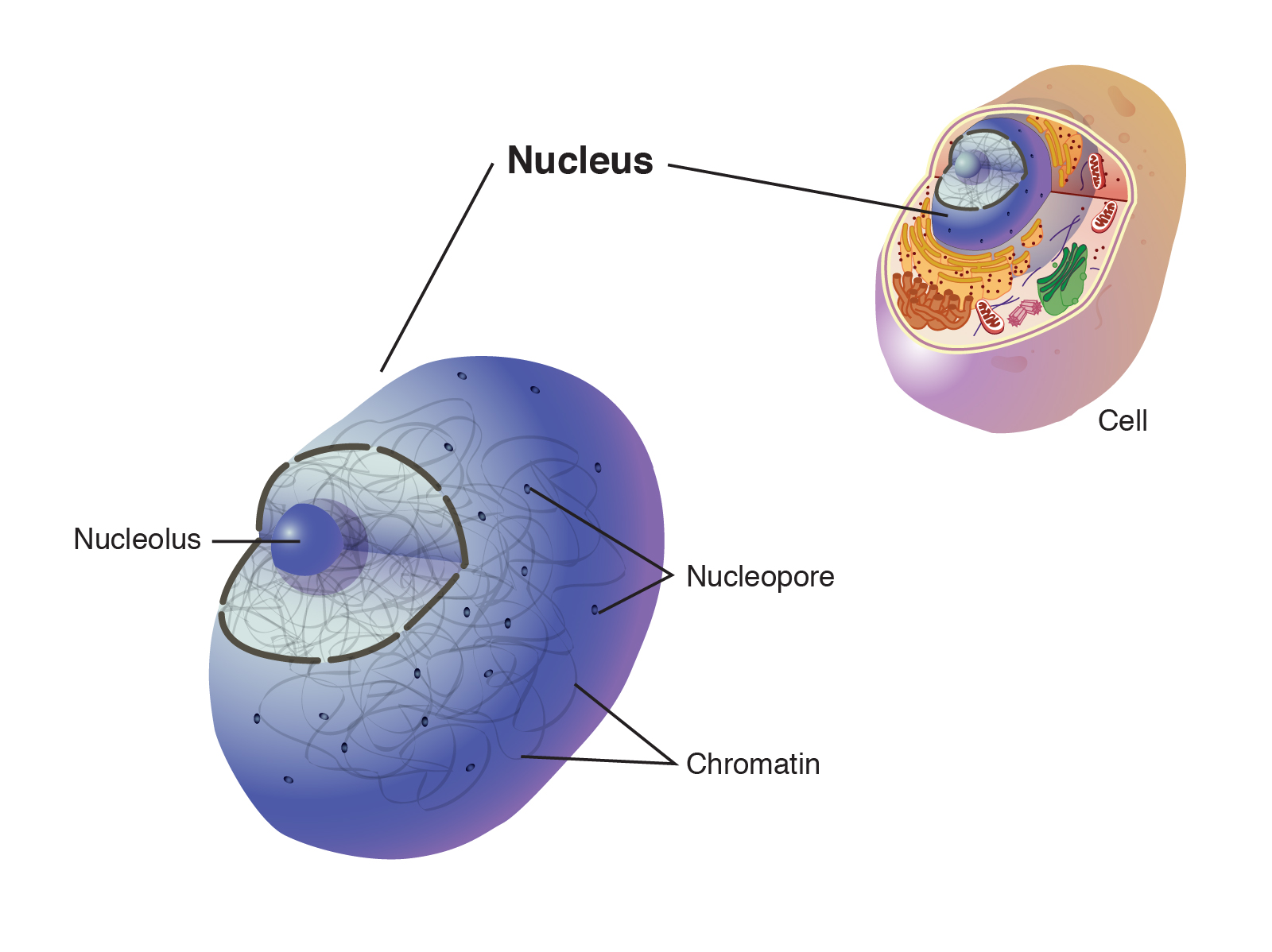 Nucleus
Atomic nucleus the very dense central region of an atom.

What is a nucleus. Nucleus definition a central part about which other parts are grouped or gathered. The nucleus coordinates with the cell activities including growth metabolism protein synthesis and reproduction. It is the main control center for the cell and acts kind of like the cells brain.
It is present in all eukaryotic cells and is responsible for controlling the activities of the cell. A spheroid body within a cell contained in a double membrane the nuclear envelope and containing the chromosomes and one or more nucleoli. The chromosomes contain deoxyribonucleic acid DNA which is the genetic material that codes.
The nucleus is an organelle found in most eukaryotic cells the exception being red blood cells. Only eukaryotic cells have a nucleus. As such it serves to maintain the integrity of the cell by facilitating transcription and replication processes.
In biology the nucleus is a small structure located inside the cells of eukaryotic organisms. The nucleus is perhaps the most important structure inside animal and plant cells. Nucleus may also refer to.
Nucleus is the organelle found in the eukaryotic cell fully enclosed inside the nuclear membrane. Nucleus plural nuclei is a Latin word for the seed inside a fruit. Nucleus A nucleus is a membrane-bound organelle that contains the cells chromosomes.
The cell nucleus is a membrane-bound structure that contains a cells hereditary information and controls its growth and reproduction. Nucleus - a part of the cell containing DNA and RNA and responsible for growth and reproduction cell nucleus karyon cell - biology the basic structural and functional unit of all organisms. In the old work nucleus employees use separate on-premise tools to collaborate communicate and connect.
This membrane seems to be continuous with the endoplasmic reticulum a membranous network of the cell and has pores which probably permit the entrance of large molecules. It is the command center of a eukaryotic cell and is usually the most notable cell organelle in both size and function. The cell nucleus is actually one of the defining characteristics of eukaryotes as the structure allows cells and organisms to reach a very high level of complexity.
The nucleus contains nearly all of the cells DNA surrounded by a network of fibrous intermediate filaments and enveloped in a double membrane called the nuclear envelopeThe nuclear envelope separates the fluid inside the nucleus called the nucleoplasm from the rest of the cellThe size of the nucleus depends on the size of the cell it is contained in with a nucleus typically occupying. Cell nucleus a central organelle of a eukaryotic cell containing most of the cells DNA. It contains a majority of the genetic material of the cell.
It most often refers to. In fact the definition of a eukaryotic cell is that it contains a nucleus while a prokaryotic cell is defined as not having a nucleus. Local drives serve as storage units for company information.
They may exist as independent units of life as in monads or may form colonies or tissues as in higher plants and animals. A few faithful friends formed the nucleus of the club. The word nucleus comes from the Latin word nucleus which is a form of the word nux which means nut or kernelThe term was coined in 1844 by Michael Faraday to describe the center of an atom.
Nucleus the prominent and specialized organelle of the cell. Pores in the nuclear membrane allow for the passage of molecules in and out of the nucleus. Nucleus in biology a specialized structure occurring in most cells except bacteria and blue-green algae and separated from the rest of the cell by a double layer the nuclear membrane.
The nucleus is a membrane-bound organelle that contains genetic material DNA of eukaryotic organisms. The contents are collectively referred to as nucleoplasm. In chemistry a nucleus is the positively charged center of the atom consisting of protons and neutronsIts also known as the atomic nucleus.