This process creates sex cells only. Also as noted mitosis has one round of phases that gives rise to two daughter cells whereas meiosis has two phases and gives rise to four daughter cells.
What Are The Differences Between Mitosis And Meiosis Quora
The four phases of mitosis are called prophase metaphase anaphase and telophase.

How is meiosis different from mitosis. Know the difference between mitosis and meiosis to clear your concepts. Key Differences between Mitosis and Meiosis Mitosis is the type of cell division in which each daughter cell divides to form two daughter cells while in meiosis four daughter cells are formed by a single Mitosis is carried out by somatic cells while meiosis takes place in germline cells. Meiosis on the other hand allows reproductive cells to divide twice to produce four non-identical daughter cells each having half the genetic material of the parent cell.
Mitosis occurs in all organisms to produce all cells except sex cells. While in meiosis it is divided into four. Secondly Mitosis occurs in Somatic cells while Meiosis happens in Sex cells or Gametic cells.
While in mitosis the number of chromosomes is the same in both mother cells and daughters. Mitosis and meiosis are both processes resulting in cell division. What are Mitosis and Meiosis Mitosis is the process by which somatic cells duplicate and divide their genetic material forming two identical daughter cells.
Further the nuclear division processes of mitosis and meiosis are quite similar but also very distinct. Mitosis occurs in all eukaryote cells while meiosis is a special type of mitosis that only occurs in gamete or sex cells. They always happen in this exact sequence.
Mitosis and meiosis are two different forms of cell division in eukaryotic cells those that have a nucleus. Sometimes you will see prophase divided further into an early and late phase. Mitosis is a process of cell division that results in two genetically identical daughter cells developing from a single parent cell.
Another difference between mitosis and meiosis is that during mitosis there is only one cell division so the cell goes through the steps of prophase metaphase anaphase and telophase once. Depending on the type of cell it can be divided by mitosis or meiosis. However during meiosis there are two cell divisions and the cell goes through each phase twice so theres prophase I prophase II etc.
The short answer to the question of how mitosis and meiosis differ is that mitosis is the general process for how cells replicate themselves creating two cells that are identical. The growth and reproduction of organisms happen via cell division. Mitosis results in two nuclei that are identical to the original nucleus.
The above points are the critical one to distinguish between the two though there are many more to focus which will make the reader much clear about the terms Mitosis and Meiosis. In meiosis daughter cells possess only half the chromosomes of the original cells. Another difference is the number of stages in both processes.
Two daughter cells are produced after mitosis and cytoplasmic division while four daughter cells are. In mitosis the stem cell divides into two. Meiosis on the other hand is the division of a germ cell involving two fissions of the nucleus and giving rise to four gametes or sex cells each possessing half the number of chromosomes of the original cell.
Mitosis creates two identical cells from one mother cell. The difference between mitosis and meiosis is that mitosis produces two diploid daughter cells that are genetically identical to. It helps to organize these schemes if you keep in mind that meiosis II is simply a mitotic division.
The Four Phases Of Mitosis. During the cell cycle the eukaryotic cell undergoes a series of changes that lead to the formation of new cells. Key differences between Mitosis and Meiosis.
Mitosis is asexual while meiosis is sexual. In animals meiosis only occurs in the cells that give rise to the sex cells gametes ie the egg and the sperm. Moreover meiosis II occurs in the production of gametes in sexual reproduction while mitosis occurs in asexual reproduction.
The division of a cell occurs once in mitosis but twice in meiosis. The meiosis process includes two divisions that produce four haploid cells. Mitosis involves the division of body cells while meiosis involves the division of sex cells.
Also neither phase of meiosis involves the replication of any new genetic material. Meiosis on the other hand results in four nuclei that each has ½ the chromosomes of the original cell. The main difference between meiosis and mitosis is the type of cells that undergo the process.
In a lot of ways meiosis is similar to mitosis. The new cells are produced in eukaryotic cells. Mitosis and meiosis are nuclear division processes that occur during cell division.
In mitosis homologs do not pair and division only happens once to produce 2 identical cells. The main difference between meiosis II and mitosis is that the meiosis II essentially occurs in haploid cells that have gone through meiosis I whereas the mitosis mainly occurs in diploid cells. The key difference between mitosis and meiosis is that mitosis produces two daughter cells that are genetically identical to parent cell while meiosis produces four daughter cells that contain half of the genetic material of the parent cell.
Cells divide and make copies facilitating the growth and development tissue repairing gamete formation etc in multicellular organisms. By contrast meiosis refers to the process by which sex cells gametes reproduce. In meiosis the DNA from both the males and females of a species will be prepared to combine and create a brand-new DNA combination passing parts of the old DNA onto the next generation.
A large RNA molecule might only be a few thousand base pairs long. DNA is a double-stranded molecule while RNA is a single-stranded molecule.
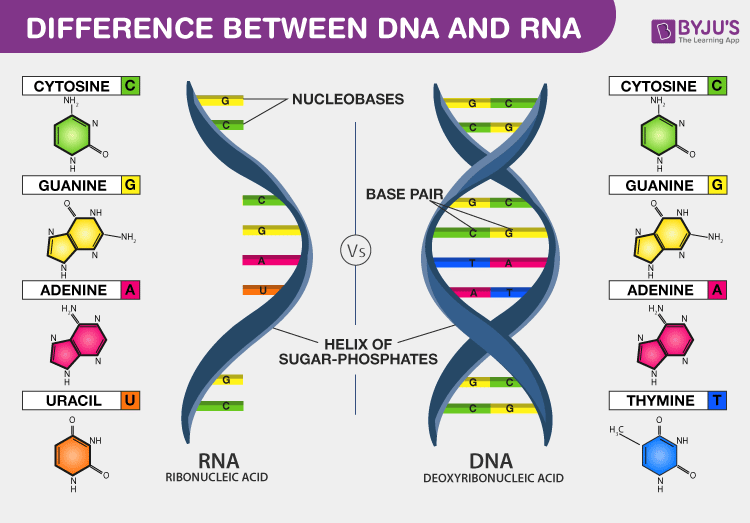 Dna Vs Rna Introduction And Differences Between Dna And Rna
Both types can infect host organisms and cause disease.

How are dna and rna different. Nucleic acids are long biological macromolecules that consist of smaller molecules called nucleotides. Conventional vaccines often use weakened or killed. There is only one kind of t DNA.
DNA is stable under alkaline conditions while RNA is not stable. Within the nucleus of eukaryotic cells DNA is organized into structures called chromosomes. The helix geometry of DNA is of B-Form A or Z also present.
DNA is a two-stranded molecule in the form of a double helix. RNA sometimes forms a secondary double helix structure but only intermittently. RNA acts as a messenger for DNA in the process of protein synthesis.
In DNA in fact pentose sugar is deoxyribose while in RNA it is ribose which has one more oxygen atom. However the ways that DNA and RNA viruses infect host cells and take over the cells biochemical machinery are different. A chromosome for example is a single long DNA molecule which would be several centimetres in length when unravelled.
There are three kinds of RNA--tRNA mRNArRNA. The synthesized mRNA is transported out of the cell nucleus where it will later on aid in the synthesis of proteins by the mechanism of translation. RNA usually is a single-strand helix consisting of shorter chains of nucleotides form A form helix.
Sponk Creative Commons 30 DNA deoxyribonucleic acid and RNA ribonucleic acid are the two types of nucleic acids found in. The major difference between DNA and RNA lies in their structure and function. The helix geometry of RNA is of A-Form.
The sugar portion of DNA is 2-Deoxyribose. DNA transcription also known as RNA synthesis is the process by which genetic information that is contained in DNA is re-written into messenger RNA mRNA by an RNA polymerase enzyme. DNA stands for Deoxyribonucleic Acid.
Viruses can be grouped according to their genetic material. Most of the DNA is located in the nucleus although a small amount can be found in mitochondria mitochondrial DNA. RNA on the other hand is a single-stranded molecule.
Moreover in DNA the nitrogen bases are adenine cytosine guanine and thymine while in RNA instead of thymine there is the uracil base. However there are a few differences between the two molecules. DNA is a double-stranded molecule consisting of a long chain of nucleotides.
In DNA and RNA these nucleotides contain four nucleobases sometimes called nitrogenous bases or simply bases two purine and pyrimidine bases each. How many different kinds are there. The advantage is that this vaccine is very stable at higher temperatures.
DNA is a double-stranded molecule consisting of a long chain of nucleotides form B form helix. RNA molecules are variable in length but much shorter than long DNA polymers. Another difference between a DNA and RNA vaccine is that a DNA vaccine delivers the message via a small electrical pulse which literally pushes the message into the cell Cifuentes-Kottkamp says.
DNA and RNA are nucleic acids. While DNA has a double-stranded helix structure RNA has a single-stranded structure. DNA and RNA are very similar.
What are the monomers. DNA and RNA perform different functions in humans. The biggest difference is in their shape.
Structural differences between DNA and RNA. RNA is found in the cytoplasm nucleus and in the ribosome. RNA strands are shorter than DNA strands.
DNA is found in the nucleus of a cell and in the mitochondria. Researchers say that gene-based or DNA and RNA vaccines are faster and cheaper to produce in large quantities than conventional vaccines. One of the primary differences between DNA and RNA is that DNA is double-stranded while RNA is single-stranded.
The sugar portion of RNA is Ribose. RNA stands for Ribonucleic Acid. What is one similarity between DNA and RNAwhat class of material same They are both nucleic acids.
First of all the nucleotides of DNA and RNA are different. Though both the nucleic acids can act as genetic material DNA is much more preferred. After all RNA is supposed to be a copy of DNA.
DNA is made up of long chains of nucleotides while RNA is made up of shorter chains of nucleotides. DNA along with RNA and proteins is one of the three major macromolecules that are essential for life. What are the nucleic acids made of same.
DNA is a much longer polymer than RNA. DNA contains nucleotides and each nucleotide has a phosphate group made up of sugar and nitrogen base. DNA is found inside the nucleus of the cell and enveloped in a chromosome to protect from damage.
Three differences between DNA and RNA are that DNA uses the base thymine while RNA uses uracil DNA uses the sugar deoxyribose while RNA uses ribose and usually DNA is double-stranded and RNA is single-stranded. That is RNA can independently code for protein synthesis while DNA coding for protein synthesis is mediated by RNA.
These include interphase Gap phase G1 phase G2 phase and Synthetic phase S phase in which the genetic material duplicates and Mitotic phase M phase Table of Contents. Mitosis and meiosis are similar in that they both occur only in eukaryotes.
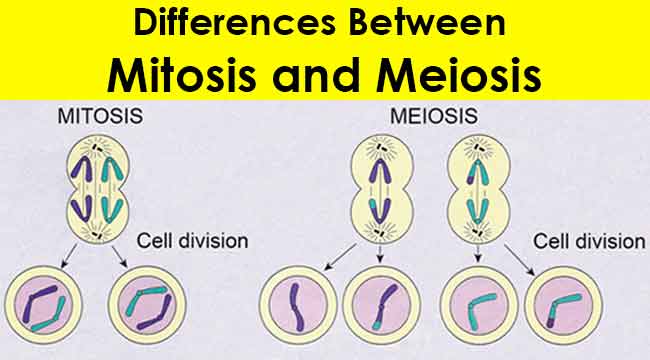 Differences Between Mitosis And Meiosis
Meiosis on the other hand allows reproductive cells to divide twice to produce four non-identical daughter cells each having half the genetic material of the parent cell.
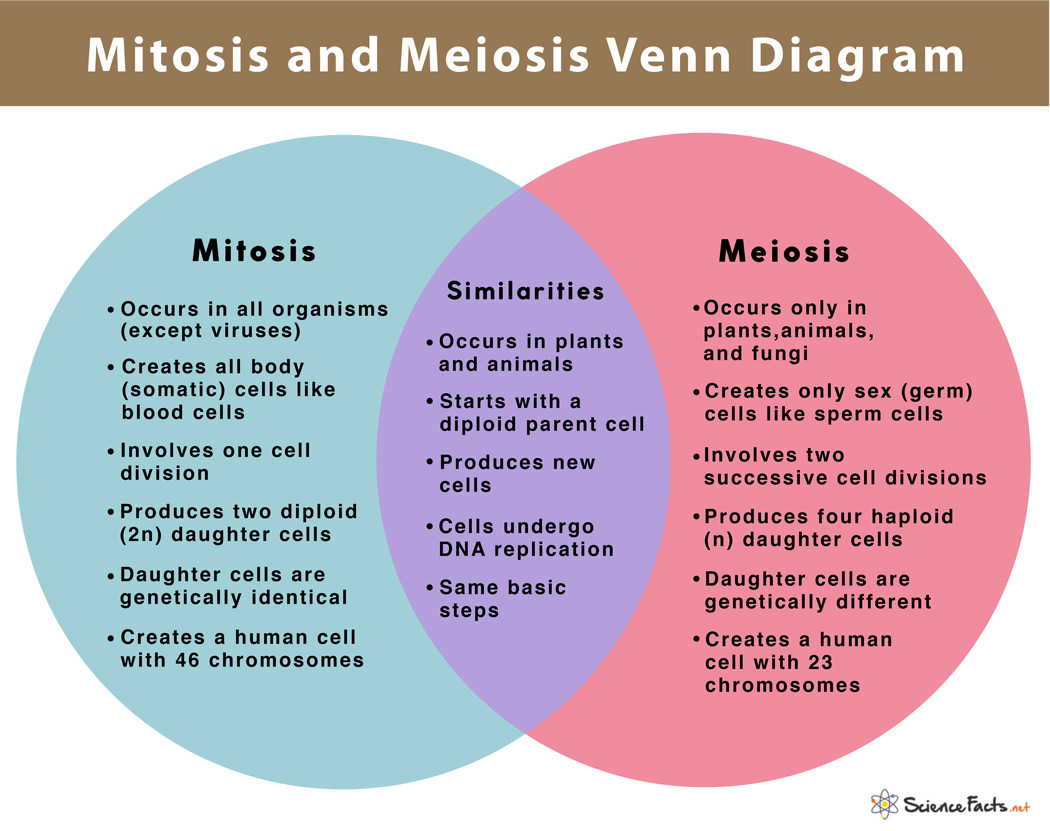
How are meiosis and mitosis different. The short answer to the question of how mitosis and meiosis differ is that mitosis is the general process for how cells replicate themselves creating two cells that are identical. Meiosis on the other hand is the division of a germ cell involving two fissions of the nucleus and giving rise to four gametes or sex cells each possessing half the number of chromosomes of the original cell. Higher life forms such human beings and animals undergo.
The main difference between meiosis II and mitosis is that the meiosis II essentially occurs in haploid cells that have gone through meiosis I whereas the mitosis mainly occurs in diploid cells. In meiosis the four resulting cells are genetically different. Mitosis and meiosis are nuclear division processes that occur during cell division.
In meiosis the DNA from both the males and females of a species will be prepared to combine and create a brand-new DNA combination passing parts of the old DNA onto the next generation. However during meiosis there are two cell divisions and the cell goes through each phase twice so theres prophase I prophase II etc. The difference between Mitosis and Meiosis is quite apparent.
Mitosis is part of the reproduction of every other kind of cell in the body. Difference Between Mitosis And Meiosis As we all know the growth and reproduction of organisms happen via cell division. Mitosis is asexual and involves a single diploid parent cell dividing into two identical diploid daughter cells whereas meiosis involves a single diploid parent dividing into four non-identical daughter cells.
They are two very different processes that have two different functions. Gametes are produced through meiosis and are crucial to sexual reproduction. Moreover meiosis II occurs in the production of gametes in sexual reproduction while mitosis occurs in asexual reproduction.
Meiosis is the process whereas diploid cells divide to produce haploid cells whereas mitosis is the division that retains the ploidy upon completion ie. Hence this is the functional difference between mitosis and meiosis. How are mitosis and meiosis the same and how are they different.
Differences between mitosis and meiosis. What are Mitosis and Meiosis Mitosis is the process by which somatic cells duplicate and divide their genetic material forming two identical daughter cells. The mitosis takes place in the somatic cells of the organisms body while the meiosis takes place in the germ cells of the organisms body.
By contrast meiosis refers to the process by which sex cells gametes reproduce. Mitosis is a process of cell division that results in two genetically identical daughter cells developing from a single parent cell. Difference Between Mitosis and Meiosis By Ayesha.
Meiosis is required for genetic variation and continuity of all living organisms. An actively dividing cell undergoes a series of stages known as the Cell cycle. These are the egg and sperm cells as well as spores and pollen.
Mitosis and meiosis go through the process of genetic replication. Mitosis produces 2 identical daughter cells with an equal number of chromosomes and types of chromosomes as the parent cell whereas meiosis cell division produces 4 genetically different daughter cells. Furthermore a significant difference between mitosis and meiosis is that the mitosis has only one cell division while meiosis has two consecutive cell division processes.
If the parent cells are haploid so will be. Mitosis is the process of asexual reproduction while meiosis involves sexual reproduction. Mitosis and meiosis share some similarities but the processes have distinct differences as well.
Henna Sherpa Living Environment April 5 2017 1. The process of mitosis takes place is both the sexually and asexually reproductive organisms whereas meiosis is the process of cell division which is only limited to the sexually reproducing organisms. Mitosis of a cell is like the photocopy of a page of a book with the final result of two pages with the same content.
The division of a cell occurs once in mitosis but twice in meiosis. Mitosis on the other hand is focused on the growth and developments of cells. Further the nuclear division processes of mitosis and meiosis are quite similar but also very distinct.
Moreover mitosis is important in growth development and tissue repair in the multicellular organisms while meiosis is important for gamete formation and creating genetic diversity among offspring. Similarly the new cells are produced in eukaryotic cells because of mitosis and meiosis. Mitosis involves the division of body cells while meiosis involves the division of sex cells.
Mitosis vs Meiosis Process Comparison In mitosis the two daughter cells are identical. Two daughter cells are produced after mitosis and cytoplasmic division while four daughter cells are. Another difference between mitosis and meiosis is that during mitosis there is only one cell division so the cell goes through the steps of prophase metaphase anaphase and telophase once.
We could compare the processes of mitosis vs meiosis in the following way. Mitosis and meiosis both are forms of cell division that corresponds with cytokinesis and the result of the processes are daughter cells which is produced by the parent cell.
Pinus heldreichii - Bosnian Pine. At first glance evergreen trees and shrubs are similar in appearance.
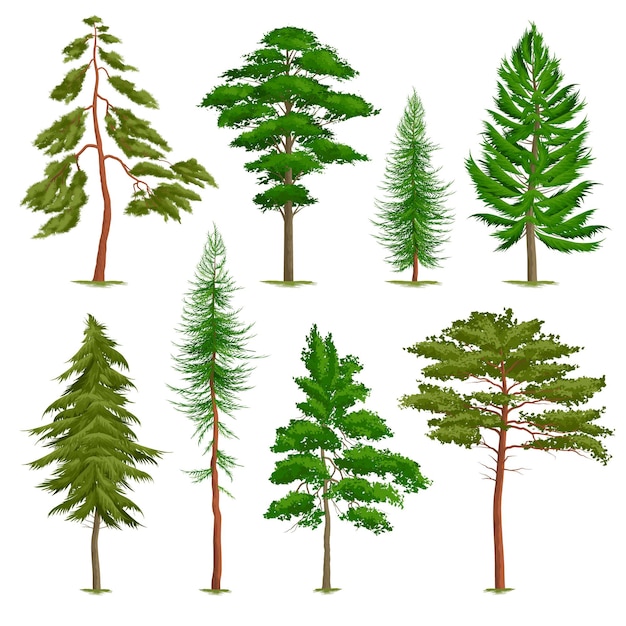 Free Vector Set Of Realistic Pine Trees Of Various Type Isolated On White
See Citrus Trees List of Vernacular Names for an example.
/pine-trees-from-around-the-world-3269718-01-cbccb83d665c43cb9be9957ea97f44f6.jpg)
Different types of pine trees. Older classifications split the genus into three subgenera. These pages are also accessible directly from the summer and winter keys. Pinus strobus is the state tree of Maine and Michigan and is the Ontario arboreal emblem.
Pinus parviflora Japanese white pine cultivars. Pinus canariensis - Canary Island Pine. Based on which subspecies you pick the Lodgepole Pine is a shrub or an evergreen tree.
The three main evergreen conifers are pine spruce and fir and a close. They belong to the genus Pinus and are further divided into subgenus Strobus white or soft pines and subgenus Pinus yellow or hard pines. Pinus cembra - Swiss Pine.
There are four various types of subspecies of this tree. Caramanica Italian Black Pine-Pinus nigra subsp. Pinus the pines is a genus of approximately 111 extant tree and shrub species.
Pinus nigra - European Black Pine or Austrian Pine. These cultivars also have some of the most stunning pollen cones in the conifer world. Pines are among the most plentiful tree.
There are several pine tree types each with different characteristics. Dwarf Balsam Fir is very fragrant and makes an ideal tree for growing in a container. These different characteristics have separated the pine trees from others similar trees.
Pinus mugo - Mountain Pine. Other bigger subspecies can grow over 150 feet high. Pines are resinous trees that are related to other types of conifers such as fir trees cedars and spruces.
Salzmannii Turkish Black Pine-Pinus nigra subsp. The genus is currently split into two subgenera. Subgenus Pinus hard pines and subgenus Strobus soft pinesEach of the subgenera have been further divided into sections based on chloroplast DNA sequencing and whole plastid genomic analysis.
They grow primarily in the east and endure the diverse weather conditions in Texas. Soft pines and hard pines. Lodgepole Pine is sometimes also known as a twister pine or a shore pine.
Sometimes in English and other languages there is more than one common name for a species. White pine is the tallest native conifer in eastern North America. This different pine tree species enjoys growing in full sun and grows best in a warm climate.
The Japanese white pines USDA zone 5 are well-formed elegant plants with soft delicate needles that are often streaked with white blue or gold. Species of Trees and Their Characteristics. Different types of pine trees grow in many different environments that include cold regions in North America rain forests and hot sandy deserts.
It is estimated that there are over 126 species of pine trees in the world. Very different from other types of cones. Updated May 09 2019.
Pine trees are also an important source of wood because they grow fast and are tall straight trees. Pallasiana Pyrenean Pine-Pinus nigra subsp. You can identify different types by their needles.
List of all Pine Trees Pinus Genus - All known species taxa types organized by scientific Latin botanical name first and common names second. On each tree page the small image is linked to a larger image. Lodgepole pine is a widely distributed pine that goes by many different common names in different regions including beach pine shore pine coast pine Bolander pine Sierra lodgepole pine tamarack pine Rocky Mountain lodgepole pine and black pine.
True pine trees will have needles in clusters of two three or five. 5- Dwarf Serbian Pine Spruce Picea omorika This different type of pine tree has green and silver needles that form dense foliage and develops reddish cones in the fall. Pines are evergreen and resinous trees rarely shrubs.
Pinus pinaster - Maritime Pine. Longleaf pines are also known as longleaf yellow pine southern yellow pine long straw pine hard pine hill pine heart pine and pitch pine. Pinus halepensis - Aleppo Pine.
Unique identifying markers are the trees branching rings which are added each year and the only five-needled eastern pine. Pinus sylvestris - Scots Pine. Pinus pinea - Stone Pine.
Soft pine trees comprise of white pines while hard pine trees consist of yellow pines red pines and pinyon pines which is seldom harvested. Pinus peuce - Macedonian Pine. Balsam fir noble fir douglas fir and fraser fir are among the most popular.
There are many different varieties of fir trees. Needles are long stiff round and grow in bundles. This very long needled pine also known as black pine in the past were grown extensively for Christmas trees however they have lost popularity in recent years.
Each individual tree is linked to its own description page. Learn more about the various species of trees available. If a shrub form is picked it will grow to just 10 feet tall.
Pinus brutia - Turkish Pine. Some tree species have Other Scientific. Some Pine tree species have a thin flaky bark when on close observation chunks of bark can be seen just hanging on or flaking off.
The smallest pine is Siberian Dwarf Pine and Potosi Pinyon and the tallest pine is Sugar Pine. Pinus nigra Helga Pinus nigra Komet Pinus nigra Green Tower Crimean Black Pine-Pinus nigra subsp. Pine trees can be divided into two main categories.
Many species of trees have Other Common Names in different languages however the Latin Botanical Scientific Name for each species of tree is universal among languages and countries.